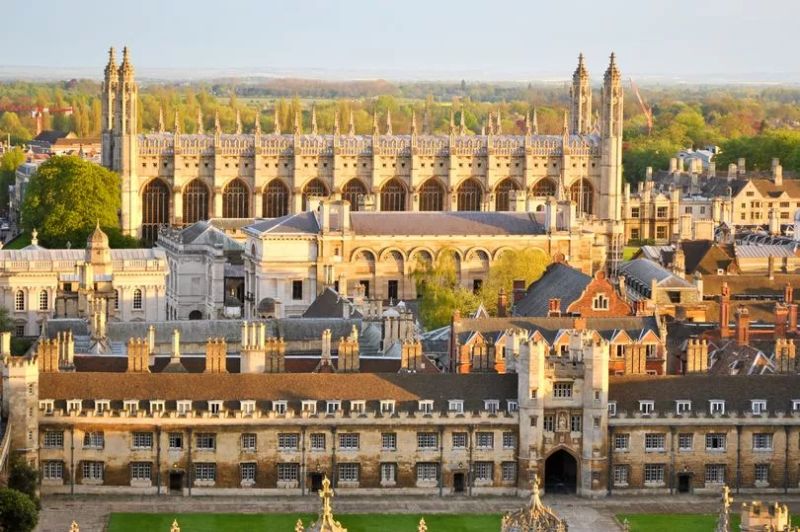
Mushrooms, not Ecosystems
I want to talk about gardening. Cambridge is famously good at creating startups — ideas here bloom faster than weeds in my front garden — but I’ve noticed that it doesn’t keep them all that well, certainly not like London or the states, which is where so many get vacuumed up into as soon as they outgrow the initial seed stage. Of course plenty stick around, but so many people I know pull up their roots and go to places like London, or Singapore, or Dubai, or San Francisco… but the people from those places tend to stay in those places, or at least swap evenly between each other. Cambridge seems to be more of a plant nursery, at least speaking anecdotally.
Setting aside the scale-up gap in all of the UK, London remains one of the business capitals of the world, with deep pools of talent, extensive networks, and wide regulatory influence. Cambridge shines brilliantly at incubating nascent innovation but falters when these fledgling businesses seek all that extra good stuff — all 50 minutes away. Essentially, while we’re fantastic gardeners, nurturing startups from seed to sapling, we might be neglecting the fertiliser required to grow mighty oaks (or, more realistically, solid medium-sized trees).
I wonder then — is it even right to call Cambridge an ecosystem, when it seems it’s more of a farm, harvesting the crops of the University of Cambridge for London consumption? It’s a non-competitive idea, which means altruism, and it looks like an altruistic place — Cambridge Enterprise cares about impact; there’s a thousand and one generous mentors here; wise angels ready to help water a new venture.
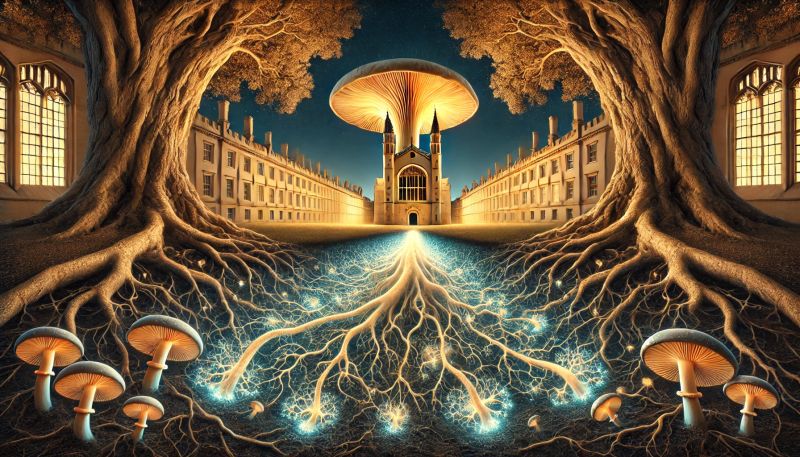
But a resource is a resource is a resource. The brainpower in this city is a resource, and people should be competing for it. Perhaps then Cambridge isn’t a farm? Perhaps it’s the mushroom spawning a “wood wide web”, connecting the roots of other ecosystems, competing for the nutrients it allows them to share, by allowing it to flourish? If you look closely, Cambridge is also quite the battleground — a thousand and one student innovation societies and exchange programs with backing from some international company.
I think this is somewhat closer to the truth. I’ve been struggling with this question a bit, recently, because it means I may need to expand the scope of my thinking as to what the ecosystem I inhabit really is. And that depends on how Cambridge will grow — if it is to remain the same, then I need to start thinking globally. If it is to become absorbed by London, then I need to turn my eyes there. If it is to become truly its own hub, then I had better plant my roots.
Originally published on LinkedIn — view the original post and discussion ↗